Written by: JJ Tan, Founder, Jelly | Last updated: 28 August 2026
Key Takeaways for UK Operators
These points summarise how automated purchasing systems help 1–5 site operators protect margins and recover subscription costs quickly.
- Automated purchasing systems increase gross profit by capturing invoices, updating ingredient prices in real time and triggering margin alerts that manual spreadsheets miss.
- UK operators running 1–5 sites gain more from fast-to-value platforms with native POS and accounting integrations than from complex enterprise suites built for large chains.
- Jelly customers typically achieve a 2 percentage point gross margin improvement and 3% food cost reduction within the first three months, with some saving thousands of pounds monthly.
- Native integrations with Square, EPOS Now, Lightspeed, Toast and Xero enable real-time dish costing and automated invoice processing, so the £129 per site monthly fee is usually recovered within weeks.
- Start protecting your margins this quarter by speaking with the Jelly team.
The UK Purchasing Automation Landscape in 2026
The UK foodservice technology market has shifted away from broad inventory tools toward focused purchasing automation. Restaurants in 2026 are moving toward fully connected financial ecosystems, where POS platforms, accounting software and back-office tools sync sales, expenses and payment data in real time. Low-friction systems that integrate into current workflows, rather than replacing the full tech stack, now drive adoption.
This demand for integration-first tools has split the UK market into two distinct tiers, each serving operators with different implementation capacity. Enterprise suites, designed for chains of 30 or more sites, offer deep procurement modules, tender management and multi-currency approval routing. They also involve implementation timelines measured in months and pricing structures that assume dedicated back-office teams. Lighter platforms, built for single-site to five-site growth operators, prioritise speed to value, intuitive interfaces and native integrations with the POS and accounting tools already in use. The gap between these tiers is where most independent UK operators currently sit: too large for a basic spreadsheet, too small to justify an enterprise rollout.
Size-Based Shortlist for 1–5 Site Operators
Operators running 1–5 sites should focus on time to first value, ease of use for non-technical kitchen teams, native UK POS and accounting integrations, and predictable monthly pricing. Larger multi-site groups operating 30 or more locations may need enterprise procurement suites with nested approval workflows, consolidated multi-entity reporting and dedicated implementation support. Those capabilities add cost and complexity that smaller operators rarely need.
For the 1–5 site segment, Jelly currently sets the benchmark. The results below are quantified and operator-verified across different concepts and operating models.
- Amber, a Mediterranean restaurant in East London, saves £3,000–£4,000 per month through invoice automation, Price Alerts and real-time dish costing, which equates to roughly 68 times the monthly subscription fee.
- The Howard Arms reached 80% gross profit after adopting Jelly, and the owner reports reacting instantly instead of waiting weeks for accountant reports.
- Sushi Revolution achieved gross profits 2–3% higher on average by using Jelly to set separate target GP thresholds for dine-in and delivery menus, accounting for 30% delivery commissions.
- Cairn Lodge Hotel cut food costs by 5% within a single month after switching to live dish costing.
Across Jelly’s customer base, operators consistently see the margin and cost improvements cited above within the first three months.
See how Jelly delivers measurable GP improvement for 1–5 site operators, then schedule a demo.
How Jelly Connects to UK POS and Accounting
Jelly connects natively with four POS systems via real-time API: Square, EPOS Now, Lightspeed and Toast. Each integration delivers item-level sales data the moment a transaction completes, which feeds margin calculations automatically. Real-time syncing of sales and cost data through integrated POS and accounting systems provides faster financial visibility and reduces manual errors. Jelly’s POS setup across all four supported systems takes under five minutes. The flow is simple: open Jelly, click Integrations, sign in to the POS, grant permissions and select which categories to sync.
On the accounting side, Jelly integrates directly with Xero, enabling a one-click push of digitised invoices into the ledger and cutting bookkeeping time by around 90%. Sage integration is in development. HMRC’s Making Tax Digital programme requires VAT-registered UK businesses above the £85,000 threshold to keep digital records and submit VAT returns using compatible software, so automated invoice capture now supports compliance as well as efficiency.
The financial case for integration is straightforward. Connecting a POS automates 2–5 hours of weekly work and delivers real-time margins and sales mix data. At £129 per site per month, most operators recover the subscription within the first few weeks through supplier credits identified by Price Alerts and food cost reductions surfaced by live dish costing.
Confirm Jelly works with your current POS and accounting stack by scheduling a quick chat.
UK Supplier Integration Checklist and Payback Example
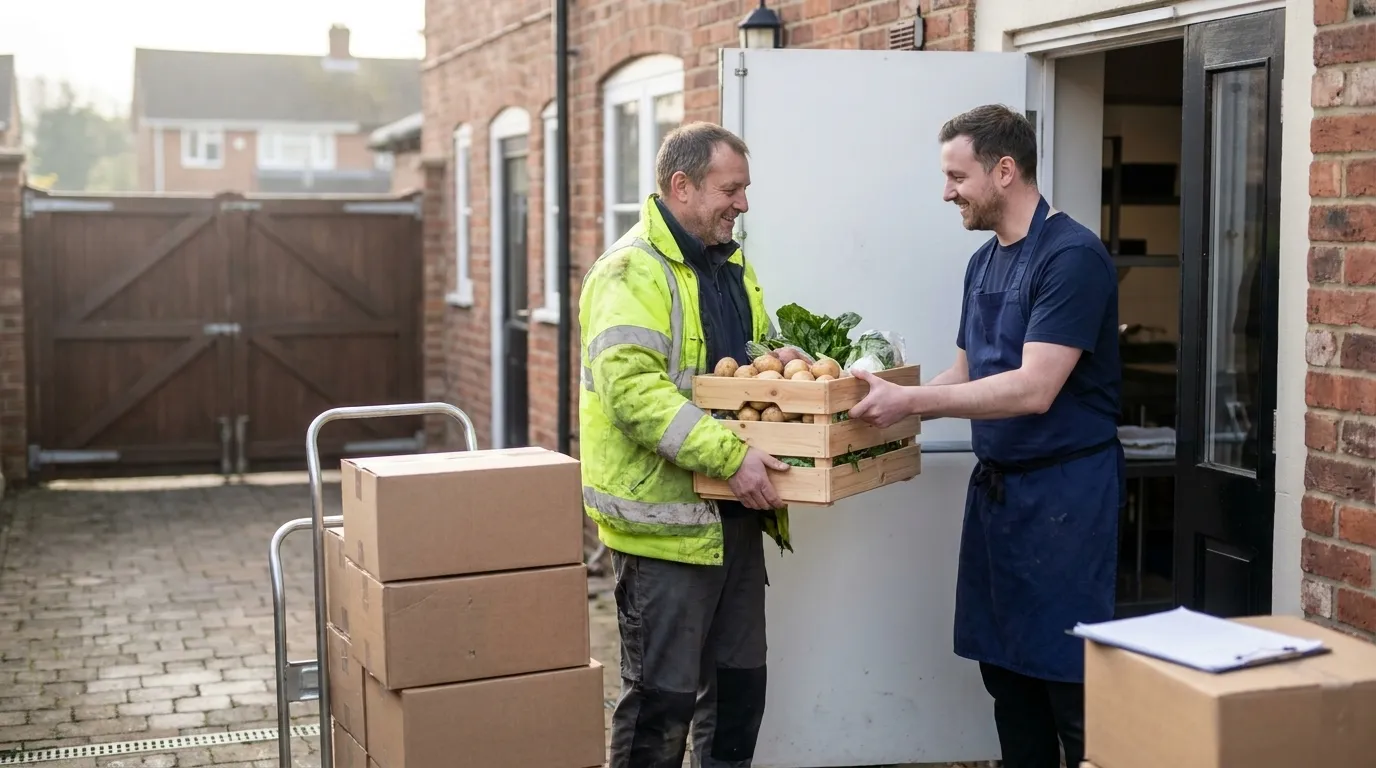
Jelly captures invoices from suppliers via email forwarding to a dedicated address or by photographing paper invoices directly into the platform. This approach covers national broadline distributors, regional wholesalers, fresh produce specialists and direct farm suppliers.
A practical payback example for a single-site operator spending £15,000 per month on food and beverage shows how invoice automation and price monitoring quickly cover the subscription fee.
- A 3% food cost reduction (the average Jelly customer outcome in the first three months) saves £450 per month.
- At £129 per site per month, the subscription is recovered in under one month from food cost savings alone.
- Additional savings from supplier credits identified by Price Alerts typically add £200–£500 per month, bringing total monthly savings to £650–£950 against a £129 subscription fee.
The supplier integration checklist for a new Jelly rollout follows a simple sequence that builds reliable data before advanced features go live.
- Forward supplier invoice email addresses to the Jelly-assigned inbox, or photograph existing paper invoices into the app.
- Confirm that Jelly has scanned and line-itemised at least one invoice per active supplier before moving on to dish costing.
- Activate Price Alerts to begin monitoring line-item price changes across all suppliers simultaneously.
- Review the Insights Dashboard to confirm spend is correctly categorised by supplier.
- Connect Xero for automated invoice push and audit trail compliance.
Implementation Readiness and Recommended Rollout Sequence
Before selecting any automated purchasing system, operators should assess two readiness factors that determine immediate ROI.
- Current manual hours: Teams spending 10–20 hours per week on invoice entry, price checking and margin reconciliation see the highest immediate ROI from automation. Manual invoice processing cycles average 14.6 business days from receipt to payment, compared with 3–5 business days with AP automation.
- Data accuracy risk: Operators relying on monthly accountant reports make menu and supplier decisions on data that is weeks old. Jelly’s Flash Report delivers daily GP visibility from the moment invoices begin flowing.
Once automation is in place, operators gain a third advantage: stronger supplier relationships backed by data. Automated procurement reduces stockouts by up to 80% and food waste by 25–40%, while Price Alerts provide documented evidence to challenge supplier price creep without damaging relationships.
The recommended Jelly rollout sequence for a 1–5 site operator follows a data-first logic. Teams capture cost data before connecting sales data, then map dishes only after both cost and sales feeds are live. This sequence ensures each step validates the previous one.
- Connect invoices by forwarding supplier emails or photographing paper invoices. Jelly begins scanning line items within 24 hours.
- Link POS categories by completing the five-minute integration with Square, EPOS Now, Lightspeed or Toast and mapping POS categories to Jelly’s cost structure.
- Map dishes using the Cookbook to build recipes from scanned ingredients. The system handles unit conversions and wastage calculations.
- Activate Price Alerts so every supplier price change triggers an immediate notification, enabling same-week negotiation or menu repricing.
Strategic Considerations and Common Pitfalls for 1–5 Site Operators
The most common pitfall for 1–5 site operators is choosing a platform designed for larger organisations. MarketMan and Nory offer broader feature sets but carry the complexity, onboarding timelines and cost structures of all-in-one enterprise tools. Kitchen Cut is a legacy system targeted at large chains with dedicated office teams and lacks the real-time dynamic updates that growing operators need. A minority of restaurant managers currently use any form of ordering automation, so early adopters still enjoy a meaningful competitive advantage.
A second pitfall is neglecting POS and accounting integrations. Without live sales data, a purchasing system cannot calculate dish-level GP in real time, which removes the core margin-protection benefit that justifies automation. This is why Jelly’s integrations with Square, EPOS Now and other supported systems, along with Xero, are native and real-time rather than batch imports. Real-time sales feeds are the prerequisite for real-time margin alerts.
Predictable pricing also matters for operators managing tight cash flow. Jelly’s flat rate of £129 per site per month carries no per-user charges, no feature tiers and no variable costs, which keeps budget forecasting straightforward across a multi-site estate.
Frequently Asked Questions
How long does Jelly take to set up and deliver first value?
Jelly is built to deliver first value within the first week. Once suppliers forward invoices to the Jelly-assigned email address, or the kitchen photographs existing paper invoices into the app, Jelly begins scanning and line-itemising within 24 hours. Price Alerts activate immediately, so operators can identify and act on supplier price changes in the same week they occur. POS integration across the four supported systems completes in the same sub-five-minute window described earlier. Legacy enterprise platforms typically require months of configuration before they produce actionable data.
Which UK suppliers does Jelly integrate with?
Jelly works with UK suppliers by capturing invoices sent via email forwarding to a dedicated Jelly inbox or by photographing paper invoices directly into the platform. Any supplier that issues an invoice can feed data into Jelly through one of these two routes.
What ROI can 1–5 site operators expect in the first three months?
Jelly customers consistently report the 2-point margin improvement and 3% cost reduction described earlier within the first three months. Amber’s £3,000–£4,000 monthly savings (detailed earlier) show the combined impact of supplier credits and tighter menu cost control. Cairn Lodge Hotel reduced food costs by 5% within a single month. For a single-site operator spending £15,000 per month on food and beverage, a 3% food cost reduction alone saves £450 per month against a £129 subscription, before additional savings from supplier negotiations.
How does Jelly compare with MarketMan, Nory and Kitchen Cut for smaller operators?
MarketMan and Nory position themselves as all-in-one platforms with broad feature sets, but this breadth brings greater complexity, longer onboarding timelines and higher costs. Those characteristics suit larger operations with dedicated back-office teams rather than 1–5 site growth operators. Kitchen Cut is a legacy system built for large chains, typically expensive and lacking the real-time dynamic updates that independent operators need to react to daily price changes. Jelly is built specifically for the 1–5 site segment. The interface suits non-technical kitchen teams, POS setup matches the under-five-minute process described earlier, and first value arrives within the first week instead of after months of configuration. Operators comparing platforms consistently highlight Jelly’s ease of use and speed to value as the decisive differentiators.
Conclusion: Protect Your Margins This Quarter
Manual purchasing is costing UK operators 2–3 percentage points of gross profit every month. Manual invoice processing costs between $12 and $40 per invoice and averages 14.6 business days from receipt to payment, which makes timely supplier negotiation and menu repricing almost impossible. For 1–5 site restaurants, pubs and boutique hotels, the answer is not an enterprise procurement suite that takes months to configure. The answer is a focused, fast-to-value system that captures every invoice, flags every price change and updates every dish margin in real time.
Jelly delivers this loop at £129 per site per month, with native integrations across Square, EPOS Now and other supported POS systems, plus Xero, and first value within the first week. Operators using Jelly are saving thousands per month, protecting margins against supplier price creep and making menu decisions on live data rather than month-old accountant reports.
Start protecting your margins this quarter, and book a demo today.