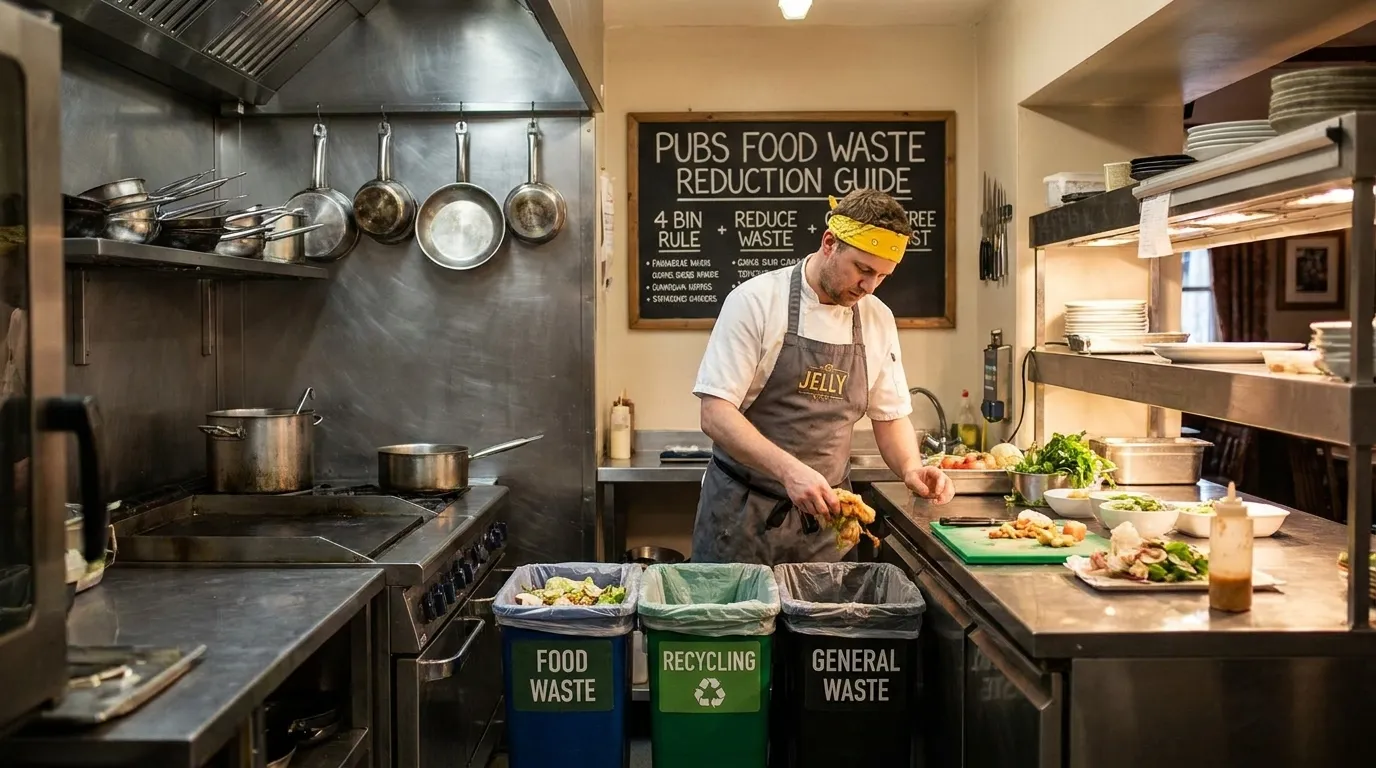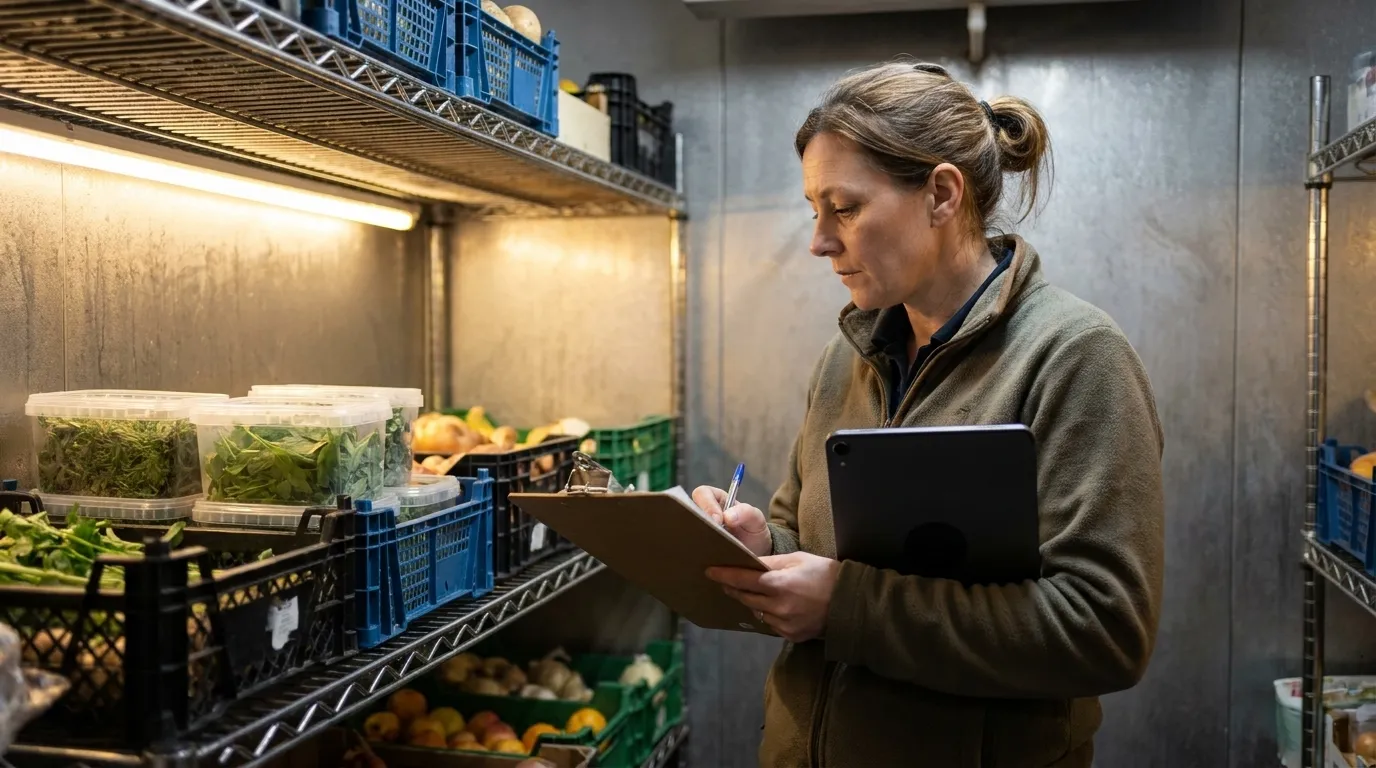

Written by: JJ Tan, Founder, Jelly | Last updated: 19 September 2026
Key Takeaways For UK Restaurant Teams
- UK restaurants should follow the food waste hierarchy: prevention software first, measurement hardware second, redistribution third.
- Prevention software such as invoice scanning and live dish costing stops waste before it is purchased, while AI bins only measure losses after they occur.
- Many UK restaurants buy in the wrong order and invest in hardware or surplus apps before establishing invoice-level cost control.
- Prevention software users report average food cost reductions of 3% and gross margin improvements of 2 percentage points within three months.
- Jelly delivers these results on a flat monthly subscription and starts generating value in the first week.
Discover How Jelly Cuts Food Costs
The Three Categories Of Food Waste Technology In The UK Hierarchy
Prevention software, including invoice scanning, price alerts, live dish costing and demand forecasting, sits at the top of the UK food waste hierarchy because it stops over-ordering and over-portioning before food is purchased. It addresses the root cause of waste.
AI smart bins and overhead cameras sit below prevention on the hierarchy. They measure waste after it has already been generated. That data is useful, yet it records a loss that has already occurred. Measurement without prior cost control functions as a diagnostic tool applied after the patient has deteriorated.
Surplus redistribution marketplaces such as Too Good To Go and its alternatives recover some value from food that would otherwise be discarded. They sit below measurement on the hierarchy because they prevent nothing upstream. Treatment options such as anaerobic digestion and on-site composting sit last and process waste that should not have been created.
The buying order follows the hierarchy directly. Prevention software is the first purchase. Measurement hardware is the second purchase, used where unexplained waste persists after cost control is in place. Redistribution and treatment follow both layers.
Jelly: First-Line Prevention For Growing UK Restaurants, Pubs And Boutique Hotels
Jelly is software built for UK restaurants, pubs and boutique hotels turning over £500,000 or more. It runs on a flat monthly rate per location with no per-user or per-feature charges. Onboarding starts generating value in the first week.
The core of Jelly is automated invoice scanning. Invoices arrive by photo or email, and Jelly digitises every line item such as quantity, SKU, price and tax. From that foundation, every other feature runs automatically. For example, the Price Alert flags every ingredient price change by supplier and gives chefs the data to challenge pricing and claim credit notes. From there, the Cookbook lets chefs build recipes by clicking ingredients already populated from scanned invoices, with unit conversions handled automatically. What previously took 28 minutes per dish now takes around three minutes. The Flash Report then delivers daily, weekly or monthly gross profit margin calculated from invoice costs and POS sales. Menu Engineering and Sales Mix show which dishes are most popular and most profitable. Digitised invoices push to Xero in one click, with Sage integration coming. POS connections with Square, EPOS Now, Toast and Lightspeed take approximately five minutes to set up.
The commercial results are consistent. Amber, a Mediterranean restaurant in East London run by Chef-Owner Murat Kilic, has used Jelly since 2020 and saves £3,000–£4,000 per month, which equates to approximately 68× ROI. One operator moved gross profit from 65% to 72% within 12 weeks on approximately £500,000 in revenue. Populu lifted GP from 68% to 72% across 16 locations. On average, Jelly users cut food costs by 3% in the first three months and gross margins rise by 2 percentage points in the same period.
Murat Kilic, Chef-Owner of Amber: “Jelly keeps my business alive.”
AI Smart Bins And Food Waste Tracking Hardware For UK Kitchens
AI food waste tracking hardware measures what is discarded after it has been generated. It sits below prevention on the hierarchy and tells you what you wasted rather than how to stop buying it. For sites where waste persists after cost control is in place, hardware adds a useful diagnostic layer.
Winnow uses AI-powered hardware to identify and weigh discarded food at the point of disposal, with its Throw & Go system enabling touch-free capture in high-volume kitchens. It is suited to large chains and hotels with high-volume kitchens. Hospitality groups including Hilton, Accor and Marriott are among the operators collectively saving more than $100 million per year in food costs using Winnow’s AI tracking. Hardware costs exceed £10,000 per site, which makes it a significant capital commitment for independent operators and small groups.
Orbisk uses an overhead camera that recognises 800+ ingredients before they are mixed, capturing ingredient name, weight, waste stream and container type at approximately 90% accuracy with no staff input required. Operators using Orbisk typically reduce food waste by up to 70%, with ROI achieved within 4 to 8 months depending on food volume. A relevant UK case study is TRIBE London Canary Wharf, which achieved a 37% average reduction in food waste per cover and saved £25,047 over nine months using Orbisk’s automated food-waste monitoring system.
Leanpath uses scales and touchscreens to capture prep and plate waste at the point of disposal, with staff confirming or logging disposals on a touchscreen. It is trusted by enterprise clients including Sodexo and the NHS. According to the FAO AgriTech Observatory, the Leanpath system costs USD 1200 a month.
All three systems measure waste after generation. They should be purchased second, after prevention software.
Prevention And Forecasting Software Options Beyond Jelly
Several other platforms occupy the prevention layer and often position themselves as all-in-one systems with longer onboarding timelines and greater complexity.
MarketMan is a cloud-based inventory management and purchasing platform used by both single-location restaurants and multi-site restaurant groups, with its Enterprise plan specifically built for multi-unit operators and franchise groups. It covers stock management, supplier ordering and recipe costing. It typically requires a dedicated office team to operate effectively and carries a longer implementation period than Jelly.
Tenzo is a restaurant analytics platform that aggregates and normalises data from POS, labour, inventory, reviews and reservations systems to surface operational insights. It suits groups with existing data infrastructure rather than single sites building their first cost-control layer.
Fourth is a data-driven workforce and inventory management platform for the restaurant, retail, and hospitality sectors. Fourth has worked with KFC UK across over 1,000 locations, and the Comptoir Group achieved a 3.5% inventory-cost saving using Fourth’s platform. These results reflect enterprise-scale deployments with dedicated implementation teams, which differs from the context of a growing independent or small group.
Jelly’s differentiator is speed to value and simplicity for kitchens without a dedicated office team. Prevention software that takes months to onboard delays the margin improvement that should begin in week one.
Surplus Marketplaces And Alternatives To Too Good To Go For UK Restaurants
Too Good To Go is the world’s largest marketplace for surplus food, connecting restaurants, bakeries, cafes and stores with consumers who collect unsold food at a reduced price. Too Good To Go charges its partners a commission on every sale, in the UK a fixed fee of £1.09 (plus VAT) for surprise bags under £4.40, rising to 25% (plus VAT) of the bag price for those over £4.40, alongside a flat annual fee of £46.80 (including VAT) after the first three months. Alternatives include SaveGoodFood, which connects businesses with charities and community groups to redistribute surplus food, with no minimum donation amount for listings, and other regional platforms operating in specific UK cities.
Redistribution recovers some value from food that would otherwise be discarded and forms a legitimate step in the hierarchy. It does not prevent waste from being generated. A restaurant using Too Good To Go before it has invoice-level cost control recovers pennies from a problem that remains unsolved at source. Redistribution should be the third purchase, after prevention software and, where appropriate, measurement hardware.
UK Food Waste Separation Rules For Restaurants
Food waste separation rules differ by nation, and the dates matter for compliance planning.
WRAP’s Target, Measure, Act framework has delivered reported benefits: 25 businesses publicly reporting 2018 and historical data collectively reported a 7% reduction in food waste, saving over £85m of food (53,000 tonnes). Compliance with separation rules and waste reduction are different objectives, yet both benefit from accurate, real-time data on what is being purchased and discarded.
Verified Costs Of Food Waste Technology Per Site
The table below covers only verified pricing. No figures have been invented or estimated.
| Technology | Verified Cost Per Site | Pricing Model |
|---|---|---|
| Jelly | £129 per month | Flat rate, no per-user or per-feature charges |
| Leanpath | USD 1,200 per month | Subscription |
| Winnow | Hardware over £10,000 | Hardware purchase plus service |
| Too Good To Go | Commission-based | Per transaction |
Recommended Buying Order By Site Type
The sequencing below is the main differentiator of this guide. It sets out a ranked buying order by site type rather than a neutral list.
Independent Or Single High-Volume Site: Jelly comes first, as invoice scanning, price alerts and live dish costing establish cost control in week one. Second, a surplus marketplace such as Too Good To Go can recover value from unavoidable surplus. Third, measurement hardware such as Leanpath becomes relevant only if waste remains unexplained after cost control is in place.
High-Volume Single Site With A Large Prep Kitchen: Jelly comes first to establish invoice-level cost control and live GP visibility. Second, Leanpath or Orbisk can capture prep and plate waste data at the point of disposal. Third, redistribution via a surplus marketplace adds value once prevention and measurement are working.
Two To Five Site Group: Jelly across all sites comes first and creates a single source of truth for invoice costs, GP margins and price alerts at every location. Second, AI smart bins such as Orbisk or Winnow fit the highest-volume kitchen where unexplained waste justifies the hardware cost. Third, redistribution suits sites with consistent surplus.
The logic is consistent across all three profiles. Prevention software runs on a flat monthly rate and generates value in week one. Hardware requires a significant upfront or monthly investment and measures waste that prevention software may already have reduced. Buying hardware before prevention software means diagnosing a problem that the team has not yet treated.
Get Your Personalised Buying Plan
Food Waste Technologies Mapped To The UK Hierarchy
The following list maps food waste reduction technologies to the UK food waste hierarchy in purchasing order.
- Prevention software, including invoice scanning, price alerts, live dish costing and demand forecasting. Jelly is the primary example for UK restaurants, pubs and boutique hotels at £129 per month per site.
- AI food waste tracking hardware, including bin cameras such as Winnow, overhead ingredient-recognition cameras such as Orbisk and prep and plate waste scales such as Leanpath.
- Surplus redistribution marketplaces, including Too Good To Go and SaveGoodFood, which recover value from unavoidable surplus but prevent nothing upstream.
- On-site composting, a treatment option that processes waste which should not have been created. It is permitted under England’s Simpler Recycling rules as an alternative to food waste collection where the waste exemption T23 conditions are met, although Defra notes most workplaces are unlikely to compost all of their organic waste effectively.
Frequently Asked Questions
What Is The Best Food Waste App In The UK?
The best food waste app for a UK restaurant depends on where the operator sits in the buying sequence. For prevention, which stops waste before it is purchased, Jelly is the primary option at £129 per month per site, with automated invoice scanning, price alerts, live dish costing and POS integration delivering measurable GP improvement in the first three months. For surplus redistribution after prevention is in place, Too Good To Go is the world’s largest marketplace for surplus food, with SaveGoodFood as an alternative for charity redistribution. Redistribution apps do not prevent waste and should sit later in the buying order.
Is There Anything Similar To Too Good To Go?
SaveGoodFood connects UK restaurants and hospitality businesses with charities and community groups to redistribute surplus food, with no minimum donation amount and a documented handover process. Other regional platforms operate in specific UK cities. All surplus redistribution platforms share the same structural limitation and recover value from food that has already been overproduced or over-purchased. They sit third in the buying sequence, after prevention software and measurement hardware.
Which Food Waste Technology Offers The Best ROI?
Prevention-layer software such as Jelly typically offers the strongest ROI because it reduces purchasing and improves gross profit across every service. AI smart bins such as Winnow, Orbisk and Leanpath add value once prevention is in place and unexplained waste remains. Surplus marketplaces such as Too Good To Go and SaveGoodFood then recover value from the remaining surplus.
What Are The Penalties For Non-Compliance With Food Waste Separation?
Enforcement varies by nation, yet all four nations treat non-compliance as a breach of environmental regulations. In England, the Environment Agency can issue compliance notices and require corrective action. In Wales, Scotland and Northern Ireland, local authorities and environmental regulators can investigate, issue notices and, in serious or persistent cases, pursue fines or prosecution. Keeping accurate records of waste contracts and demonstrating active efforts to reduce and separate food waste reduces compliance risk.
AI Smart Bins Vs Inventory Software: Which Reduces Waste More?
Prevention software and AI smart bins address different points in the waste chain and do not act as direct substitutes. Prevention software, including invoice scanning, price alerts and live dish costing, acts before food is purchased and stops over-ordering and over-portioning at source. AI smart bins measure waste after it has been generated and identify what was discarded, when and why. A kitchen with strong cost control through prevention software will have less waste for a smart bin to measure. A kitchen that installs a smart bin before establishing cost control focuses on diagnosis before treatment. The hierarchy-consistent answer is prevention software first and measurement hardware second where unexplained waste persists.
Conclusion: A Practical Decision Framework For UK Operators
The UK food waste hierarchy provides the buying order. Prevention sits above measurement, measurement sits above redistribution and treatment comes last. Many UK restaurants currently buy in the wrong sequence and choose hardware or surplus apps before establishing invoice-level cost control.
For an independent restaurant, pub or boutique hotel turning over £500,000 or more, the first purchase is Jelly. Invoice scanning, price alerts and live dish costing go live in week one and deliver the 3% food cost reduction and 2 percentage point margin gain seen across Jelly users in the first quarter. As the Amber case study shows, prevention-layer software can deliver substantial monthly savings before any hardware is considered.
For a two to five site group, Jelly across all sites creates the single source of truth that makes every subsequent technology decision, including hardware, redistribution and treatment, data-led rather than speculative.
Buy in hierarchy order. Start with prevention. Start with Jelly.